
Subscribe to our newsletter
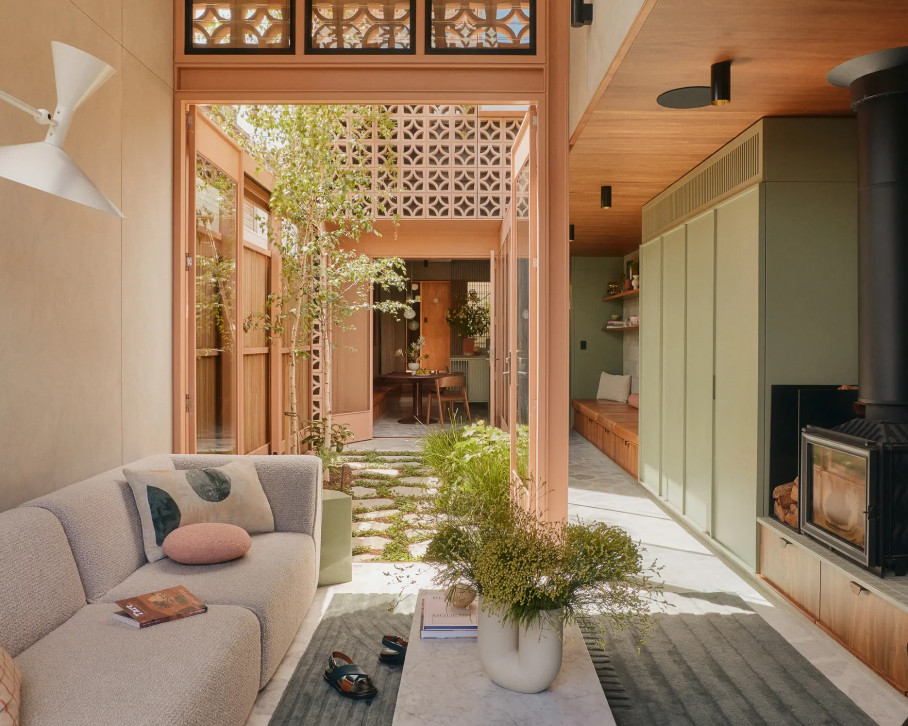
We are passionate about the art of identifying what is thehero of an existing site and transforming it into a contemporary, optimisedspace that attracts new life.
We are passionate about the art of identifying what is thehero of an existing site and transforming it into a contemporary, optimisedspace that attracts new life. Some maycall this adaptive reuse, others call it light refurbishment, but the fact is, valuingthe embodied carbon that already exists within projects and finding more waysto use what we have, will have the biggest impact.
We also recognise and respect the story that the existingsite has to tell – it requires project experience and confidence to navigatethe options (and a desire to celebrate a legacy design) with the vision to seehow it could manifest. Theproblem-solving process is complex, detailed and creative – truly rewarding foreveryone involved. In our first foray into Versa Conversations, we met with @PaulRosenberg from @Revert on waste, recycling and the circular economy, and where Revertcome into the process.
We continue to see vast amounts of waste occurring in fitoutprojects especially, with the lease cycles driving the life cycles of the builtenvironment. The scenarios thatcontribute to this waste include make good clauses that demolish fitouts onexit of the tenant, warm shell ceilings and floors which are undesired by thenext tenant, and the want for a blank canvas for workplace design that doesn’tinhibit the typical design process or aesthetic direction.
I_23/2.2, Velenec ullabor poratur aut eium venis magnim.
We are passionate about the art of identifying what is thehero of an existing site and transforming it into a contemporary, optimisedspace that attracts new life. Some maycall this adaptive reuse, others call it light refurbishment, but the fact is, valuingthe embodied carbon that already exists within projects and finding more waysto use what we have, will have the biggest impact. We also recognise and respect the story that the existingsite has to tell – it requires project experience and confidence to navigatethe options (and a desire to celebrate a legacy design) with the vision to seehow it could manifest. Theproblem-solving process is complex, detailed and creative – truly rewarding foreveryone involved. In our first foray into Versa Conversations, we met with @PaulRosenberg from @Revert on waste, recycling and the circular economy, and where Revertcome into the process.
We continue to see vast amounts of waste occurring in fitoutprojects especially, with the lease cycles driving the life cycles of the builtenvironment. The scenarios thatcontribute to this waste include make good clauses that demolish fitouts onexit of the tenant, warm shell ceilings and floors which are undesired by thenext tenant, and the want for a blank canvas for workplace design that doesn’tinhibit the typical design process or aesthetic direction.
Creating time for analysing and bringing the right people intothe conversation early is key to creating a pathway for the project. In our experience, this may flag a need foradditional investigations to mitigate risks regarding latent conditions thataffect program, cost and performance down the track. It also enables a period of research to createnew opportunities for recycling and repurposing in the project. @Paul Rosenberg from @Revert not only looksto see what can be repurposed, such as task chairs given to charity ordisassembled, but also materials such as glass and textiles that can be recycledto create new products, such as Green Ceramics.@Revert are working with @Kandui Technologies, in collaboration with @SMaRT@ UNSW with @Veena Sahajwalla to create bespoke products like Green Ceramics,within the timeframes of the project, creating a circular economy and a story fortenants and landlords.
Reporting and governance for waste management and embodiedcarbon is also on the agenda – often driven by the developers and end usersthemselves, so the time for measurement and accountability is on our doorstep. Selecting quality fitout contractors (andsubcontractors such as Revert) who mandate waste separation as standard ontheir sites and adhere to a chain of custody for recycling, is another step we asan industry can lead.